Driving in Tanzania can be tough on your car. The heat, dust, and mixed road conditions can strain your engine, tires, and cooling system. Poor maintenance leads to higher costs, reduced performance, and safety risks. To avoid this, here are 9 key tips:
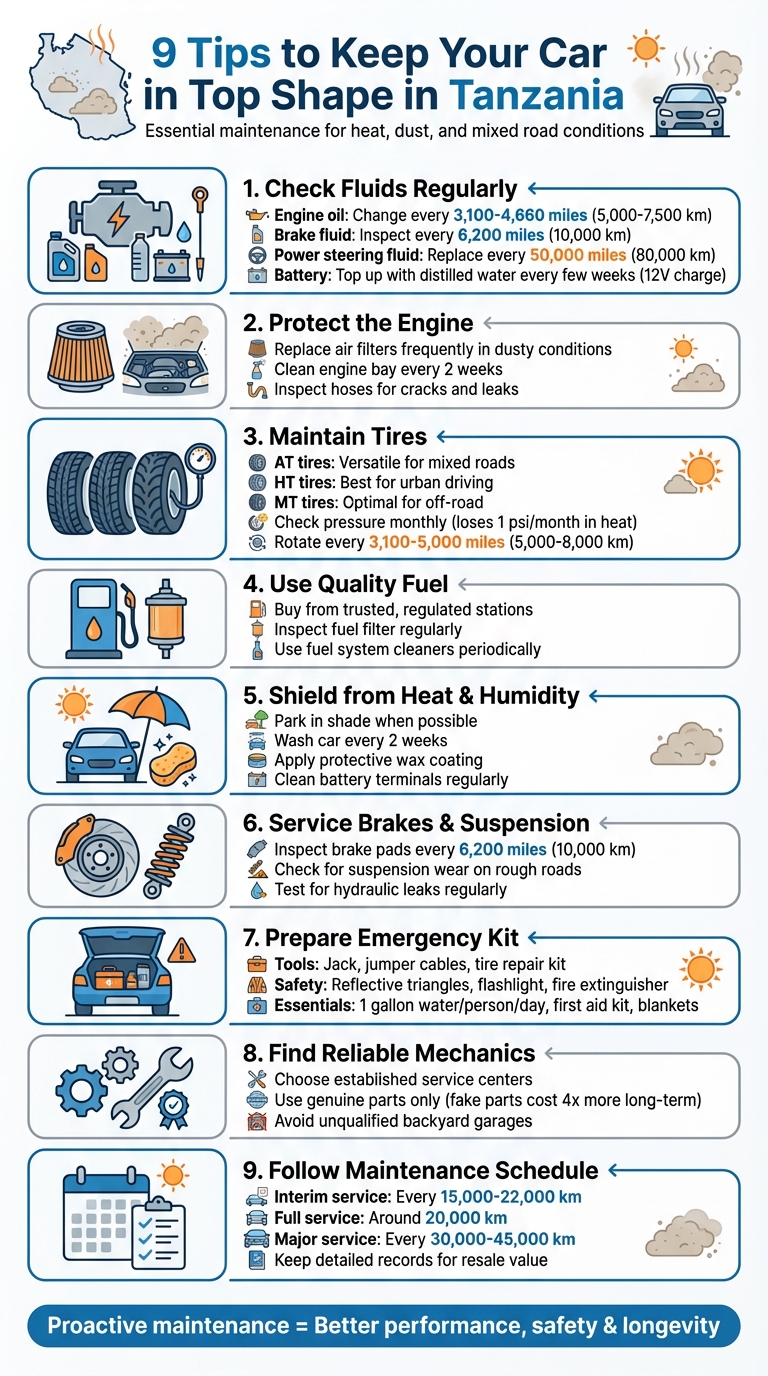
- Check Fluids Regularly: Engine oil, coolant, brake fluid, and power steering fluid need frequent checks due to heat and dust.
- Protect the Engine: Replace air filters often and clean the engine bay to prevent dust-related damage.
- Maintain Tires: Choose the right type (AT, HT, or MT), check pressure monthly, and rotate every 3,100–5,000 miles.
- Use Quality Fuel: Avoid contaminated fuel by buying from trusted stations and inspect your fuel filter periodically.
- Shield from Heat & Humidity: Park in shade, wash your car every two weeks, and apply wax to prevent rust.
- Service Brakes & Suspension: Inspect brake pads every 6,200 miles and check for suspension wear to handle rough roads.
- Prepare an Emergency Kit: Carry tools, a first aid kit, water, and safety gear for remote travel.
- Find Reliable Mechanics: Work with reputable garages and use genuine parts to avoid costly repairs.
- Follow a Maintenance Schedule: Stick to regular service intervals and keep detailed records for diagnostics and resale value.
Staying proactive with these steps ensures better performance, safety, and longevity for your car in Tanzania’s challenging conditions.
9 Essential Car Maintenance Tips for Tanzania’s Driving Conditions
1. Check Fluids and Cooling System Regularly
Tanzania’s hot and dusty environment can take a toll on your car, especially its fluids and cooling system. Regular maintenance is a must to keep your vehicle running smoothly. For instance, engine oil in such conditions should be changed every 3,100 to 4,660 miles (5,000 to 7,500 kilometers) to ensure optimal performance and protection. The cooling system deserves special attention too, as overheating can wreak havoc on your engine.
Start by checking the coolant level in the transparent refill container – never open the radiator cap when the engine is hot. While you’re at it, inspect underneath your car for puddles or wet spots that might indicate leaks. A moist or unusual smell could also hint at escaping engine oil, antifreeze, or transmission fluid. Heat can accelerate wear and tear on rubber hoses, making them prone to cracks or bulges, so keep an eye on these as well.
"The heat in Tanzania can put a strain on your car’s engine and cooling system, especially the radiator." – John Mwakibete, Author, AutoMag Tanzania
Beyond coolant checks, traditional lead-acid batteries need topping up with distilled water every few weeks to maintain a charge of around 12 volts. Power steering fluid should be replaced approximately every 50,000 miles (80,000 kilometers), while brake fluid needs inspection every 6,200 miles (10,000 kilometers).
Keep an eye on your temperature gauge. If it climbs above mid-level or fluctuates after about 30 minutes of driving, it could signal issues like a failing water pump, a clogged radiator, or air pockets in the cooling system. To prevent airflow blockages, clean the radiator grille regularly.
2. Protect Your Engine from Dust and Poor Road Conditions
Keeping your engine safe from dust and rough roads is just as important as routine fluid checks. Tanzania’s unpaved roads and dusty environment can be tough on your vehicle. The air filter plays a key role in blocking small particles that could otherwise damage your engine. However, in these conditions, air filters clog much faster than they would in cleaner areas, which can restrict airflow and increase fuel consumption. If left unchecked, this can lead to costly engine damage.
Make it a habit to check your air filter regularly and replace it as soon as it shows signs of clogging. Also, examine engine hoses for cracks or leaks, as the constant vibrations from rough roads can cause unexpected wear and tear. For those who frequently drive off-road, investing in a high-quality, reusable air filter can offer better protection against fine particles.
Engine oil is another critical factor. It acts as a lubricant to keep engine parts running smoothly. However, in Tanzania’s dusty and demanding conditions, oil can become contaminated more quickly, reducing its effectiveness.
Don’t overlook the importance of keeping your engine bay clean. A good rule of thumb is to clean it every two weeks to prevent dust buildup that could affect performance. Also, take a moment to wipe down battery terminals to avoid dust-related corrosion, which can make it harder to start your car. These simple preventive measures can go a long way in safeguarding your engine against the challenges of driving in Tanzania.
3. Maintain Tires for Mixed Urban and Rural Roads
Navigating Tanzanian roads means tackling a mix of smooth city streets and rugged off-road tracks. Picking the right tires is crucial. All-Terrain (AT) tires are versatile, handling both paved and rough roads well. Highway Terrain (HT) tires are ideal for urban driving, offering better fuel efficiency and comfort. Meanwhile, Mud-Terrain (MT) tires shine off-road but might compromise fuel efficiency on city roads. Choosing the right tire type ensures both safety and performance across Tanzania’s varied landscapes.
Regular tire maintenance is equally important. In Tanzania’s heat, tires can lose about 1 psi of pressure each month. Underinflated tires wear out faster and hurt fuel efficiency, while overinflated ones can reduce traction, especially on uneven surfaces. For accurate readings, check tire pressure when the tires are cool, and don’t forget to include the spare. Tight valve caps can also help prevent slow leaks.
Inspect your tires frequently for any cuts, punctures, or sidewall bulges – these can lead to dangerous blowouts, especially on rough roads. Rotating your tires every 3,100–5,000 miles (5,000–8,000 km) helps ensure even wear and extends their lifespan. During the rainy season, tread depth becomes especially important; deeper grooves help channel water away, reducing the risk of hydroplaning.
To stay on top of tire pressure, consider investing in a personal tire pressure gauge. Gas station tools can often be inaccurate, and a small device like this can save you money and keep you safer on Tanzania’s diverse roads. These small but essential habits can make all the difference in keeping your tires – and your journey – on track.
4. Choose Quality Fuel and Monitor Fuel System
The type of fuel you use has a direct impact on your car’s performance, especially in challenging environments like Tanzania. Poor-quality or contaminated fuel can lead to rough starts, reduced fuel efficiency, and even power loss. Contaminants such as dirt, metal particles, or water can trigger the check engine light and gradually damage critical engine components. To protect your engine, make it a habit to buy fuel from reliable and regulated stations. Additionally, don’t overlook the importance of inspecting your fuel filter regularly to keep the fuel system running smoothly.
Your fuel filter acts as the gatekeeper, blocking harmful particles from entering the engine. Over time, sludge and debris can clog the filter, restricting fuel flow. This forces the fuel pump to work overtime, which can eventually lead to pump failure. To avoid this, replace the fuel filter as recommended – or sooner if you suspect the fuel quality is questionable.
Cleaning your fuel system periodically is another way to maintain peak performance. If your vehicle has been sitting idle or has been filled with lower-grade fuel, using a fuel system cleaner like Lucas Oil Complete Fuel System Cleaner or STP Fuel Treatment can help remove deposits and improve efficiency.
Keeping an eye on your fuel consumption is also a smart way to detect potential issues. For example, a sudden drop in mileage might point to poor fuel quality or a clogged system.
For diesel engines, consider using cetane-boosting additives such as Power Service Diesel Kleen to improve performance and ensure easier starts. If your vehicle has been stored for a while or you notice a strong fuel odor, check for a blocked fuel tank vent. Diesel and gasoline both degrade over time, losing their original color and turning cloudy. To prevent oxidation during storage, fuel stabilizers can be a useful addition.
5. Protect Your Car from Sun, Heat, and Coastal Humidity
Tanzania’s intense sun and coastal humidity can be tough on your vehicle. Prolonged UV exposure can fade your car’s paint and turn the interior into an oven. If you live near the coast, in places like Dar es Salaam or Zanzibar, the salty air combined with moisture speeds up corrosion, especially on the car’s body and battery terminals. This corrosion often shows up as a white or bluish-green powder. Here’s how you can minimize these effects.
Where you park your car matters. Aim to park under trees, awnings, or any covered area to protect it from direct sunlight. If shaded parking isn’t an option, use a windshield sunshade or apply window tints to block out the harsh rays and keep the interior cooler. Regular washing is equally important – it helps remove salt, dust, and grime that can damage your car’s finish.
Speaking of washing, make it a habit to clean your car every two weeks. Coastal conditions trap moisture in dirt and salt, which can lead to rust. After washing, apply a protective wax, like one made from carnauba or synthetic materials, to create a moisture-repelling barrier. For even longer-lasting protection, consider ceramic coatings.
Your car battery also needs extra attention in this climate. Coastal humidity and salt can corrode the terminals, so clean them regularly with a wire brush or a baking soda solution. Heat can also cause fluid in lead-acid batteries to evaporate faster, so check the fluid levels and top up with distilled water when needed. A fully charged battery should typically measure around 12 volts.
When it comes to keeping your car cool, simple steps can make a big difference. Before turning on the AC, crack the windows for a moment to let out trapped hot air, then switch to recirculation mode for better efficiency. If possible, plan your trips during cooler times of the day – before 9:00 AM or after 4:00 PM – to avoid the midday heat. For hybrid and electric vehicles, parking in the shade is even more critical to prevent premature battery wear.
sbb-itb-d9186c2
6. Service Brakes and Suspension for Tanzanian Road Conditions
Once you’ve tackled fluids, engine care, and tire maintenance, it’s time to turn your attention to brakes and suspension. These systems are crucial for keeping your vehicle safe on Tanzania’s mix of paved and unpaved roads. They work in tandem – if your suspension is compromised, it can reduce tire contact with the road, leading to longer braking distances and less stability. Add in the region’s hot, dusty environment, and you’ll find that brake pads wear out faster, while tires face a higher risk of blowouts on rough terrain.
Make it a habit to inspect your brake pads every 6,200 miles (10,000 kilometers), or even more often if you’re navigating particularly challenging road conditions. Warning signs like squealing or grinding sounds, delayed stopping, or a soft brake pedal shouldn’t be ignored. Similarly, suspension issues often show up as uneven tire wear, a noticeably bumpy ride, or the front of your vehicle "nose-diving" when you brake. If a 20-inch wheel has over 2 inches of play, it could point to problems with the suspension or steering linkage.
Tanzanian roads are notorious for causing specific problems like cracked brake drums, worn-out pads, leaking shock absorbers, and damaged leaf springs. Dust buildup in the wheel wells can also reduce braking efficiency, so keeping the undercarriage clean is essential to avoid debris-related issues. To check for hydraulic leaks, try this simple test: pump the brake pedal three times and hold it down for five seconds. If the pedal sinks further, there could be a leak in the system.
Routine wheel alignment and balancing are equally important. These steps help prevent uneven tire wear and reduce strain on the suspension. Many local service centers offer free 30-point inspections, which can catch early signs of suspension wear before they become serious.
If your driving often includes unpaved or hilly roads, consider scheduling professional brake and suspension servicing on a regular basis. Also, check your tire pressure monthly and rotate your tires to ensure even wear. While basic brake service packages might start at $99.99, investing in preventive maintenance now can save you from more expensive repairs down the road.
7. Prepare an Emergency and Tool Kit for Remote Travel
Once you’ve ensured your car’s fluids, engine, tires, and brakes are in top condition, it’s time to prepare for the unexpected. Remote travel often means you’re far from professional help, so having a well-stocked emergency and tool kit can make all the difference. A thorough kit should cover mechanical repairs, personal safety, and basic survival needs, giving you peace of mind until help arrives.
Start by packing essential mechanical tools like screwdrivers, pliers, wrenches, ratchet wrenches, and Allen keys. Add a hydraulic jack, jumper cables, a tire repair kit, and a portable tire inflator. Before setting off, double-check that all tools are in working order. Many modern cars in Tanzania no longer include fire extinguishers, so it’s wise to purchase one and store it under the passenger seat for easy access.
Visibility and safety gear are critical, especially on dimly lit rural roads. Reflective triangles are a must – they alert other drivers to your presence if you’ve broken down, helping to avoid accidents in low-light situations. Pack a flashlight with spare batteries (or a hand-crank option), along with road flares and reflective triangles, to ensure you’re visible at night without relying solely on your headlights.
For personal safety, include a first aid kit, at least 1 gallon of water per person per day, and blankets or warm clothing to provide shelter in case of delays. A portable power bank is also invaluable for keeping your phone charged, especially in areas where charging points are rare. On long drives, make it a habit to stop every two hours to rest and stay hydrated – this helps you stay alert and focused.
Given Tanzania’s challenging terrain, recovery tools are essential. Pack gloves, rags, rain ponchos, a small shovel, and sand to help free your tires if you get stuck in mud. Don’t forget your vehicle logbook, which serves as proof of ownership and registration – this is a legal requirement for travel on Tanzanian roads.
8. Use Trustworthy Local Mechanics and Quality Parts
Finding a dependable mechanic in Tanzania can make all the difference when it comes to avoiding expensive repairs and unexpected breakdowns. Look for well-established service centers with a solid reputation in major cities across the country. These centers are more likely to provide consistent service and ensure that only authentic parts are used in your vehicle.
Why does this matter? Counterfeit parts – ranging from brake pads to spark plugs – can wreak havoc on your car and significantly increase maintenance costs. In fact, using fake components like bearings, suspension parts, or tires can end up costing four times as much in the long run. To ensure you’re getting genuine parts, pay attention to the country of origin, brand name, and manufacturer details.
"In reality, cheap products were even more expensive because they had a short life span and could easily damage vehicles."
- William Erio, Director General, Fair Competition Commission (FCC)
Steer clear of unqualified mechanics or backyard garages that may prioritize quick profits over quality. These establishments often cut corners by using substandard parts, which can lead to more damage down the road. Instead, choose professional garages that offer transparent pricing, warranties on major parts, and advanced diagnostic tools. Alex Evodius, Managing Director of Evolution Motors, highlights this issue, noting that many car owners worsen their problems by opting for unqualified service providers instead of professional mechanics.
Another smart move is to enroll in a maintenance plan that covers routine services like oil changes and brake replacements. This approach not only helps manage costs but also ensures genuine parts are used consistently. Stick to the recommended service intervals – minor services every 15,000–22,000 km and major services every 30,000–45,000 km – to keep your car in top shape and maintain its resale value. Following a routine maintenance schedule, paired with authentic parts, is key to extending the life of your vehicle.
9. Follow a Maintenance Schedule and Keep Records
Sticking to a regular maintenance schedule is one of the best ways to keep your car running smoothly, especially in Tanzania’s challenging driving conditions. Start by checking your owner’s manual – usually tucked away in your glove box – for the manufacturer’s recommended service intervals. However, given the area’s hot and dusty environment, you might need to adjust these guidelines. For instance, air filters tend to clog faster, and fluids can break down more quickly in such conditions. Tweaking your schedule to fit these factors creates a solid plan for keeping your car in top shape.
Here’s a general idea of what your maintenance timeline might look like:
- Interim service: Every 15,000–22,000 km, covering oil and filter changes along with basic inspections.
- Full service: Around 20,000 km, including checks on brakes, steering, and the battery.
- Major service: Every 30,000–45,000 km, addressing spark plugs, air filters, and suspension.
Just as crucial as the maintenance itself is keeping detailed records of everything you’ve done. Save receipts, invoices, and service logs – whether you’re working with a trusted local mechanic or handling some tasks yourself. These records aren’t just for your peace of mind; they help mechanics diagnose problems faster, saving you both time and money.
"Keeping a clear record of your car’s service history gives you more than just peace of mind. It provides proof of proper maintenance, increases resale value, and helps your mechanic diagnose issues more quickly."
Beyond simplifying diagnostics, thorough record-keeping can boost your car’s resale value. Prospective buyers see documented maintenance as proof of responsible ownership, which can make your vehicle more appealing. Whether you prefer a physical service book or a digital tracking method, maintaining consistent records ensures your car gets the care it needs while safeguarding your investment for the future.
Conclusion
Taking care of your car in Tanzania goes beyond the usual maintenance checklist – it means accounting for the country’s unique climate and road conditions. The intense heat, dusty environments, and varied terrain put added pressure on key components like your cooling system and suspension. Staying ahead with regular checks on fluids, tires, brakes, and filters not only prevents unexpected breakdowns but also helps your car last longer.
Partnering with reliable local mechanics who understand Tanzania’s driving conditions can make all the difference. These experts know that the demanding roads here often call for more frequent inspections, such as brake checks every 10,000 kilometers. Their knowledge, combined with your commitment to routine maintenance, creates a solid plan to avoid expensive repairs later.
Beyond keeping your car running smoothly, consistent upkeep also enhances its resale value and shows responsible ownership. Maintaining detailed service records doesn’t just make future servicing easier; it also helps mechanics quickly identify any issues while showcasing your vehicle’s care history.
Tanzania’s roads may be challenging, but with the right maintenance habits, you can drive with confidence, knowing your car is prepared for whatever lies ahead. Regular care isn’t just about keeping the engine running – it’s about ensuring your safety and peace of mind on every journey.
FAQs
How often should I change my car’s air filter in Tanzania’s dusty environment?
In Tanzania’s dusty environment, it’s a good idea to replace your car’s air filter every 15,000 miles, which usually translates to about once a year. However, if you often drive on dirt roads or in areas with heavy dust, you might need to change it more frequently – closer to every 7,500–10,000 miles.
Keeping the air filter clean ensures your engine gets proper airflow, boosts fuel efficiency, and helps your car maintain peak performance, even in tough driving conditions.
How can I tell if my car’s suspension needs repair after driving on rough roads?
Driving on rough, uneven roads can put serious stress on your car’s suspension system. If your ride feels bumpy or unusually harsh, or you hear odd noises like clunking or rattling over dips, it might be time to take a closer look. Other warning signs include uneven tire wear, the car pulling to one side while driving, or excessive bouncing after hitting a bump – these could all point to problems with shocks, struts, or other suspension components.
Pay close attention to how your car handles. Does it feel unstable? Lean more than usual when turning? Sit lower on one side? These are clear signals that your suspension might need attention. Catching these problems early can save you from expensive repairs down the road and keep your car safe and running efficiently, even on the toughest terrain.
How can I make sure the fuel I buy in Tanzania is high quality?
To ensure you’re filling up with quality fuel in Tanzania, here are a few practical tips to keep in mind:
- Check for the TBS seal: Look for the official Tanzania Bureau of Standards (TBS) marking on the pump. This seal confirms the fuel meets regulatory standards. Make sure it’s intact and hasn’t been tampered with before you start refueling.
- Stick to trusted gas stations: Opt for well-established and licensed fuel stations. These stations are regularly inspected and are more likely to provide clean, reliable fuel. If you’re unsure, you can ask the station attendant about their fuel certification.
- Examine the fuel’s clarity and smell: High-quality fuel should appear clear and free from sediment. It should also have a neutral odor. If the fuel seems cloudy, contains particles, or has an unusually strong smell, stop the process and notify the station manager.
Being mindful of these steps can help keep your car’s engine in good shape and ensure smoother rides across Tanzania’s roads.
Related Blog Posts
- Essential Car Maintenance Checklist for Tanzanian Roads
- Common Car Problems in Tanzania: Solutions Guide
- Car maintenance tips in Tanzania
- Common Car Problems in Tanzania (And How to Fix Them)