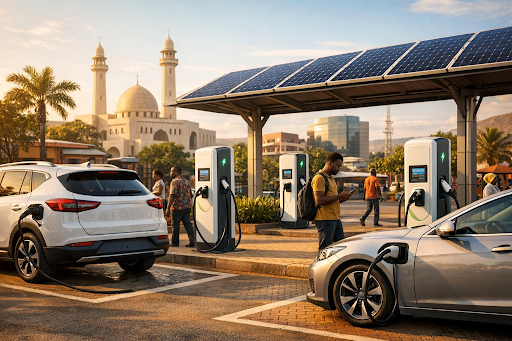
The roar of the internal combustion engine is slowly being replaced by the quiet hum of electric motors on the streets of Dar es Salaam, Arusha, and Dodoma. As of early 2026, Tanzania has reached a pivotal milestone in its green energy journey. TANESCO, the national power utility, in collaboration with a consortium of private sector innovators, has officially unveiled the 2026 National E-Mobility Roadmap.
This strategic plan aims to solve the single biggest hurdle to electric vehicle (EV) adoption in the country: range anxiety. By building a robust, reliable, and accessible charging network, Tanzania is positioning itself as a regional leader in sustainable transport.
A Unified Vision for a Greener Tanzania
The 2026 Roadmap is not just a government document; it is a blueprint for action. The initiative targets the installation of 50 new public charging stations by the end of 2027, with a significant portion of these high-speed hubs going live this year. These stations are being strategically placed along the “Central Corridor” and “Northern Circuit” to ensure that driving an electric car from Dar es Salaam to Mwanza is as seamless as driving a petrol one.
A key highlight of the roadmap is the integration of the Julius Nyerere Hydropower Project (JNHPP). With the grid now benefiting from over 2,100MW of renewable energy, the “Green Charging Hubs” will be powered by some of the cleanest electricity in Africa. For the latest industry news and detailed breakdowns of these new charging locations, automag.tz provides real-time updates for Tanzanian motorists.
Public-Private Partnerships: The Engine of Growth
TANESCO isn’t working alone. Private players like Ampersand, E-Piki, and local tech firms are spearheading the rollout of Level 2 and Level 3 DC fast chargers. These partnerships are essential for creating a “pay-as-you-go” ecosystem that accepts mobile money—a crucial feature for the Tanzanian market.
While the new grid infrastructure is exciting, many drivers are still weighing their options between new electric models and reliable pre-owned vehicles. To find second-hand cars suitable for these conditions, check out auto24.tz. You can find durable favorites like the Toyota Passo or Honda Fit, which remain popular for their fuel efficiency while the EV charging network continues to expand into residential areas.
Sustainable Mobility: Importing the Future
For drivers looking to explore sustainable mobility, EV24.africa offers import options for electric cars, expanding choices in the premium and mid-range segments. From the sleek Tesla Model 3 to more affordable Chinese-manufactured EVs, the ability to import certified electric vehicles ensures that Tanzanians have access to the same technology currently transforming cities in Europe and Asia.4
The government has further supported this by maintaining VAT and customs duty exemptions for electric vehicles in the 2025/26 budget, making the switch more financially attractive than ever before.
Technical Insight: Understanding Your Charging Options
To get the most out of the new national grid, it is important to understand the three main types of charging available in Tanzania in 2026:
| Charger Type | Typical Use Case | Charging Time |
| Level 1 (AC) | Home charging (standard outlet) | 12–20 hours (Overnight) |
| Level 2 (AC) | Office buildings & Malls | 4–8 hours |
| DC Fast Charge | Highway Hubs & Petrol Stations | 30–60 minutes |
Pro-Tips: Caring for Your EV Battery in the Tropics
Whether you are charging at a new TANESCO hub or using a home setup, maintaining your battery health is vital for the longevity of your vehicle.
- Avoid the “Empty to Full” Cycle: Try to keep your battery between 20% and 80%. Consistently charging to 100% or letting it drop to 0% can degrade the lithium-ion cells faster in high temperatures.
- Park in the Shade: The Tanzanian sun is intense. High ambient heat can stress the battery’s cooling system. Whenever possible, park in shaded areas or garages.
- Software Updates: Modern EVs are “computers on wheels.” Ensure your vehicle’s firmware is up to date, as manufacturers often release updates that improve battery management and charging efficiency.
- Slow Down on the Highway: High speeds generate more heat in the battery. If you’re on a long trip to Dodoma, maintaining a steady 80-100 km/h will maximize your range. Discover additional tips on driving efficiently on our main site.
The Road Ahead
The 2026 National EV Infrastructure Roadmap is a clear signal that the future of Tanzanian transport is electric. As the charging grid expands from Dar es Salaam to the furthest corners of the country, the dream of zero-emission travel is becoming a daily reality for thousands of Tanzanians.