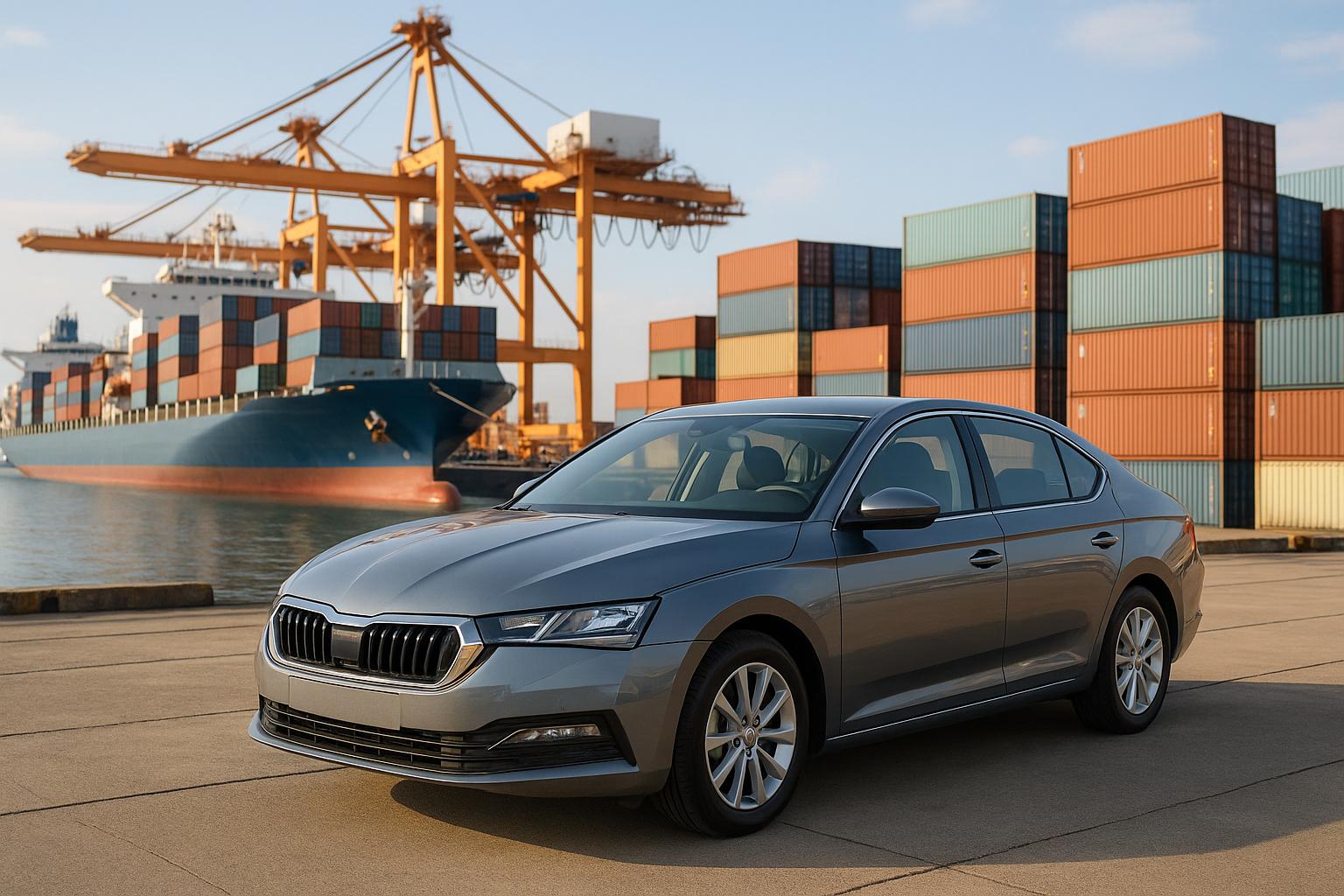
Importing a car to Tanzania can be a straightforward process if you follow the steps carefully. Here’s what you need to know:
- Why Import? Imported cars, especially used ones from Japan, are often more affordable and offer better reliability and fuel efficiency.
- Key Requirements: Vehicles must be right-hand drive and under 8 years old to avoid extra excise duty. A Pre-shipment Verification of Conformity (PVoC) inspection is mandatory.
- Costs to Consider: Import Duty (15%-25%), VAT (20%), excise duty (varies by engine size and age), and other fees like the Railway Development Levy (1.5%) are based on the vehicle’s CIF value (Cost, Insurance, Freight).
- Shipping Options: Choose between Roll-on/Roll-off (RoRo) for affordability or container shipping for added protection.
- Customs Clearance: Ensure all documents, like the Bill of Lading and Certificate of Conformity, are in order. A licensed clearing agent is required for submissions.
- Registration: After customs, register your vehicle with the Tanzania Revenue Authority (TRA) and secure insurance before hitting the road.
Step 1: Choosing Your Vehicle
Tanzania’s Vehicle Import Requirements
In Tanzania, vehicles aren’t outright banned based on age, but there’s an extra cost for older cars. If a vehicle is 8 years or older from its manufacture year, an additional excise duty applies – 25% for non-utility vehicles and 5% for utility vehicles. This threshold was reduced from 10 years to 8 years as of July 1, 2014, impacting light cars and trucks, though machinery remains unaffected.
Before importing, every vehicle must meet mandatory inspection standards. The Tanzania Bureau of Standards requires all vehicles to undergo a Pre-shipment Verification of Conformity (PVoC) inspection. Without a Certificate of Conformity (CoC), your vehicle could face rejection at the port or incur fines. Keep these regulations in mind when selecting your vehicle.
What to Look for in a Vehicle
When choosing a vehicle, prioritize models that can handle both urban roads and rougher terrains. Durability is essential – your car should be able to manage varied conditions without constant repairs. With fuel prices on the rise, fuel efficiency is another key factor. Additionally, ensure that spare parts for your chosen model are easily available in Tanzania. Models like the Toyota Land Cruiser Prado, Toyota Harrier, and Nissan X-Trail are popular choices due to their reliability and ease of maintenance.
Calculating Your Total Costs
After selecting a vehicle, calculate the total import costs to avoid surprises at customs. The Tanzania Revenue Authority provides the Used Motor Vehicle Valuation System (UMVVS), an online tool designed to estimate these expenses. By entering your vehicle’s details, you’ll get a breakdown of fees, including Import Duty, Excise Duty, VAT, Customs Processing Fee, Railway Development Levy, and Registration Fee.
The starting point for these costs is the CIF value, which combines the vehicle price, insurance, and freight charges. An 18% VAT is then applied to the CIF value plus the customs and excise duties. Using the UMVVS tool before making your final purchase ensures you’re prepared for all associated costs.
Step 2: Shipping and Required Documents
Documents You Need for Shipping
Getting your documents in order is crucial to avoid delays at customs. Here’s what you’ll need:
- Bill of Lading: Provided by your shipping company, this document acts as proof of shipment and ownership transfer.
- Commercial Invoice: This is your final proof of purchase, showing the amount paid for the vehicle.
- Original Vehicle Registration Documents: These confirm your ownership of the vehicle.
- Pre-shipment or Conformity Certificate: Verifies that your vehicle meets required safety and quality standards.
In addition, make sure you have a valid passport or national ID, a tax ID number, and, if you’re working with a clearing agent, an Agent’s Authorization Letter. If you qualify for duty exemptions, keep those exemption documents accessible. For assistance with the paperwork, the Tanzania Revenue Authority website lists registered Clearing and Forwarding Agents.
Once your documents are ready, you can focus on selecting the best shipping method for your vehicle.
Shipping Options and Delivery Times
When shipping a vehicle to Tanzania, you can choose between Roll-on/Roll-off (RoRo) and Container Shipping. RoRo is typically the more budget-friendly option, where your car is driven onto the ship and secured on deck. For added protection from weather and theft, container shipping is the better choice, as your vehicle is enclosed. If you’re shipping oversized vehicles or heavy equipment, specialized methods like Lift On/Lift Off (LoLo) or Flat Rack shipping are available. For those needing faster delivery, airfreight is an option, though it comes with a higher price tag.
The time it takes for your vehicle to arrive depends on the departure port and shipping route. To streamline the process, your clearing agent must submit all import documents through the TANCIS system at least seven days before the vehicle’s arrival. This online system ensures documentation is processed ahead of time, helping to speed up customs clearance.
What Happens When Your Car Arrives at Port
When your vehicle arrives at Dar es Salaam, Tanzania’s main import port, it will first be offloaded and then go through customs clearance. During this process, customs officials will inspect the vehicle and verify all submitted documents. Once cleared, the vehicle may be stored temporarily at the port while you finalize the remaining steps.
A licensed Clearing and Forwarding Agent is required to handle TANCIS submissions and coordinate with customs officials. After customs clearance, you’ll need to pay port charges to the Tanzania Ports Authority before you can take possession of the vehicle. Be aware that incomplete declarations are automatically rejected by the system, so double-check all your paperwork beforehand. To estimate fees, you can use the Tanzania Revenue Authority’s online duty calculator, which provides a helpful guide to the costs you’ll need to cover.
Importing Cars to Tanzania? Pre-Shipment Inspection Rules Explained!
sbb-itb-d9186c2
Step 3: Clearing Customs and Paying Taxes

Tanzania Car Import Tax Rates by Vehicle Type and Engine Size
Customs Inspections and Compliance
Once your vehicle arrives at the port, it undergoes a mandatory inspection by the Tanzania Bureau of Standards, in line with the EACCMA 2004. This process ensures your vehicle meets safety and environmental standards. A key part of this step is the Pre-Shipment Verification of Conformity (PVoC), along with a Certificate of Conformity (CoC). Your clearing and forwarding agent will work closely with customs officials during the inspection, which checks important elements like engine condition and emissions. This ensures the vehicle is roadworthy and meets Tanzanian requirements.
Import Taxes and Duties Explained
The import taxes and duties you’ll pay depend on the type of vehicle you’re bringing in. For instance, commuter vans, lorries, pick-ups, and buses are subject to a 15% duty, while most cars face a 25% duty. On top of that, VAT and excise duties are calculated based on the engine size and age of the vehicle.
Here’s a breakdown of the tax structure for different vehicle types:
| Vehicle Type | Import Duty | VAT | Excise Duty |
|---|---|---|---|
| Commuter vans, lorries, pick-ups, buses | 15% | 20% | 0% |
| Cars with 0-1,000 cc engine | 25% | 20% | 0% |
| Cars with 1,001-2,000 cc engine | 25% | 18% | Varies by age |
| Cars with over 2,000 cc engine | 25% | 20% | Varies by age |
These percentages are calculated based on the CIF (Cost, Insurance, Freight) value. VAT and excise duties are applied after the import duty has been added. To estimate your costs, you can use the TRA’s Used Motor Vehicle Valuation System (UMVVS), though actual charges might differ slightly. Other fees include Import Declaration Fees, the Railway Development Levy, and Vehicle Registration Fees.
Once you’ve calculated your total taxes, the next step is to make payments and organize your paperwork.
How to Pay and Keep Records
After clearing customs, it’s time to settle all required fees and ensure your paperwork is in order. Payments should be made directly to the Tanzania Revenue Authority through commercial banks. Before transferring funds, confirm the amounts using TRA’s online tools to avoid errors.
Keep all receipts and documents – such as customs clearance certificates, tax payment receipts, and the CoC – securely stored. These will be essential when registering your vehicle with the TRA and obtaining your number plates. Missing any of these documents could result in delays or penalties, so staying organized is key to a smooth registration process.
Step 4: Registration and Getting Road-Ready
How to Register Your Vehicle
Once you’ve cleared customs and paid the necessary taxes, the next step is to register your car with the Tanzania Revenue Authority (TRA). Start by downloading form VR1 (for new vehicles) from the TRA portal. Make sure to fill in all required details accurately, including the vehicle identification number, chassis number, owner information, and inspection results.
Before submitting your application, gather the following documents: your customs clearance form (T4), Roadworthiness Certificate, proof of identity with address, duty and VAT payment receipts, and the sales invoice or ownership title. Keep in mind that the Roadworthiness Certificate is valid for only 30 days, so plan to obtain it close to your registration date.
Registration fees include costs for your road license, number plates, inspection, and the registration itself. Payments can be made through mobile money, the TRA’s online system, or at accredited banks. Be sure to complete the payment within 30 days to avoid penalties.
To finalize registration, book an appointment through the TRA’s online portal. You can choose from regional centers in cities like Dar es Salaam, Arusha, or Mwanza. Appointments in major cities tend to fill up quickly, so it’s wise to schedule early. Once confirmed, you’ll receive official Tanzanian number plates with anti-tamper stickers. Your vehicle logbook, which serves as proof of ownership, will be issued within 7 to 14 working days.
After completing registration, the next steps involve securing insurance and performing final checks to ensure your car is road-ready.
Insurance and Roadworthiness Requirements
After registering your vehicle, you must obtain third-party insurance, which is mandatory for driving legally in Tanzania. This type of insurance covers liability for bodily injury and property damage caused to others. Policies for private vehicles typically start at TZS 118,000 (around $45) and are offered by major insurance providers.
While third-party insurance is the minimum requirement, comprehensive coverage offers more extensive protection. For example, Toyota’s T-Protect Plus Cover provides perks like a replacement vehicle during repairs, no excess charges for accidents, and medical expense coverage up to TZS 500,000 (approximately $190). If your car has a tracking device, you might even qualify for a 5% discount on comprehensive policies.
Additionally, your vehicle must pass an emissions test as part of the registration process. Keep the emissions certificate along with your other registration documents, as you’ll need it for renewals and inspections down the line.
Preparing Your Car for Tanzanian Roads
With your registration and insurance sorted, it’s time to make sure your car is ready to handle the variety of Tanzanian roads. Check that critical systems like brakes, lights, and alignment are in top condition.
Road conditions in Tanzania can range from smooth highways to rugged rural paths. Be mindful of fuel quality and availability, especially in remote areas. Always keep your vehicle logbook, insurance certificate, and registration documents in the car, as traffic police may ask to see them during routine stops. To avoid potential headaches, store copies of these documents separately in case the originals are lost or misplaced – losing your logbook can lead to significant issues later.
Conclusion: Making the Import Process Easier
Careful preparation and following the rules can make importing a car much smoother. The process becomes manageable if you plan ahead. Start by selecting a vehicle that meets Tanzania’s requirements – right-hand drive, no older than 8 years, and compliant with emissions standards. Don’t skip the mandatory pre-shipment inspection, as failing to do so can lead to fines or even rejection at customs.
"Importing a car into Tanzania can be a cost-effective solution if you follow the correct procedures and prepare in advance." – Carusedjp
Another key step is using the TRA’s online duty calculator to estimate import duties, VAT, and other fees. This helps you avoid unexpected costs. Additionally, hiring a licensed clearing and forwarding agent can make navigating the Tanzania Customs Integrated System (TANCIS) much easier. Remember, all necessary documents must be submitted at least 7 days before your ship arrives.
Having complete and accurate documentation is non-negotiable – any missing or incorrect details will result in automatic rejection by the clearance system. Keep your customs forms, insurance certificates, and other important papers well-organized, and always have backup copies in case the originals go missing. By staying on top of these steps, you can ensure your car reaches Tanzanian roads without unnecessary delays or extra expenses.
FAQs
How do I get a Certificate of Conformity for my imported car in Tanzania?
To get a Certificate of Conformity (CoC) for your imported vehicle in Tanzania, the car needs to undergo a pre-shipment inspection by authorized agencies like JEVIC. These inspections are designed to confirm that the vehicle complies with safety, emissions, and mechanical standards before it’s shipped.
During the inspection, the car’s condition and adherence to Tanzanian regulations are thoroughly checked. If the vehicle meets the required standards, a Certificate of Conformity is issued. This document is essential for customs clearance and vehicle registration in Tanzania.
How do I figure out the total cost of importing a car to Tanzania, including taxes and duties?
To figure out the total cost of bringing a car into Tanzania, you’ll need to start with the vehicle’s CIF value – this includes the Cost, Insurance, and Freight. Then, factor in these additional taxes and duties:
- Customs duty: Ranges from 0% to 25% of the CIF value, depending on the type of vehicle.
- Value Added Tax (VAT): Calculated at 18% of the combined total of the CIF value and customs duty.
- Excise duty: Falls between 0% and 15%, depending on the engine size.
For a precise calculation, you can use the duty calculators available on the Tanzania Revenue Authority (TRA) website. Don’t forget to include other costs like port handling, registration, and inspection fees in your final estimate.
What are the pros and cons of choosing Roll-on/Roll-off (RoRo) shipping versus container shipping for importing a car?
Roll-on/Roll-off (RoRo) shipping is often the go-to option for those looking for a quicker and more cost-effective way to transport standard vehicles. With this method, cars are driven directly onto the ship and secured. However, keep in mind that vehicles are exposed to the elements, as well as potential theft or damage, since they are not enclosed during transit.
On the other hand, container shipping offers a higher level of security and protection. Your car is placed inside a sealed container, shielding it from weather, theft, and accidental damage. While this method comes with a higher price tag, it’s an excellent choice for luxury, high-value, or delicate vehicles that require extra care. Deciding between the two options ultimately depends on your budget, the type of vehicle, and how much protection you need during transport.
Related Blog Posts
- Car registration costs in Tanzania
- Step-by-Step Guide to Buying a Car in Tanzania
- Import a Car from Japan to Tanzania: Costs, Duties, and Tips for Dar es Salaam
- 8 Things You Need to Know Before Importing a Car into Tanzania