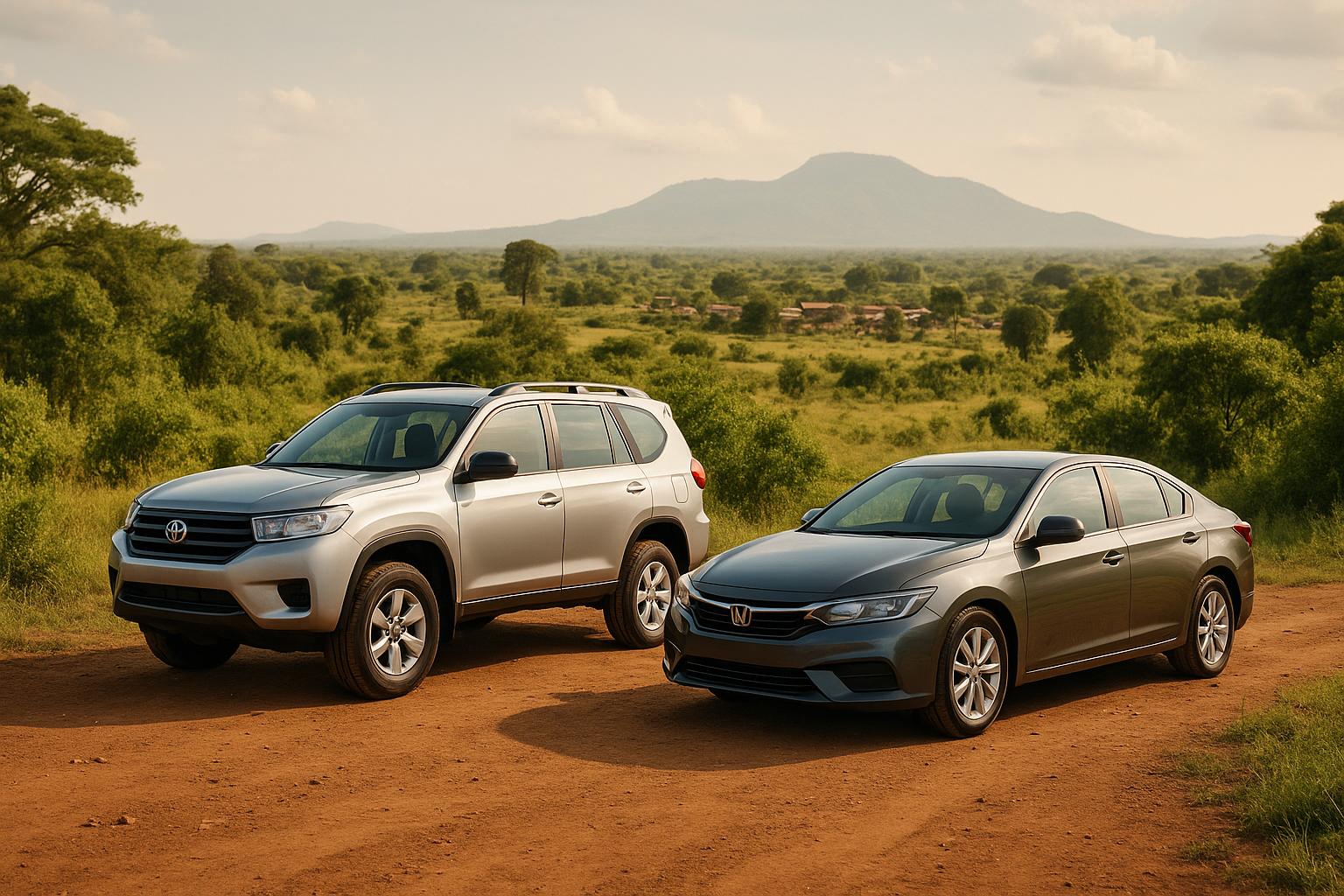
When choosing between an SUV and a sedan for driving in Tanzania, the decision largely depends on where you drive most often and your specific needs. Here’s the bottom line:
- SUVs are ideal for rural areas, unpaved roads, and challenging terrains. They offer higher ground clearance, 4WD capabilities, and more cargo space, making them perfect for long trips, family use, or off-road driving.
- Sedans are better suited for city driving, offering excellent fuel efficiency, lower maintenance costs, and easier maneuverability in tight urban spaces.
Key Factors to Consider:
- Road Conditions: Rural areas with potholes, mud, and rocky roads favor SUVs, while well-maintained city streets are sedan-friendly.
- Budget: Sedans are more affordable upfront and cheaper to maintain. SUVs cost more but retain better resale value.
- Usage: For daily commutes and city errands, sedans are sufficient. For trips to remote areas or frequent cargo needs, SUVs are more practical.
Quick Comparison:
| Factor | SUVs | Sedans |
|---|---|---|
| Ground Clearance | 7-9 inches (better for rough roads) | 5-6 inches (best for smooth roads) |
| Fuel Efficiency | 18-25 mpg (higher consumption) | 28-40 mpg (more economical) |
| Purchase Price | $15,000-$35,000 (higher upfront cost) | $8,000-$20,000 (more budget-friendly) |
| Maintenance Costs | Higher (tires, parts) | Lower (easier access to parts) |
| Cargo Space | 30-80 cubic feet (spacious) | 12-16 cubic feet (limited to trunk) |
| Terrain Performance | Handles off-road, mud, and water easily | Struggles on rough terrain |
| City Maneuverability | Harder to park in tight spaces | Easier to park and navigate |
Conclusion:
- Choose an SUV if you frequently travel to rural areas, need more space, or require off-road capability.
- Opt for a sedan if your driving is mostly in cities, and you prioritize fuel efficiency and affordability.
Your lifestyle, driving habits, and budget should guide your decision.
SUVs for Tanzanian Roads
SUVs have gained immense popularity among Tanzanian drivers, thanks to their ability to handle the diverse and often challenging road conditions found across the country. From navigating urban traffic to tackling rugged rural trails, SUVs bring a range of features that make them well-suited for Tanzania’s unique driving environment.
SUV Features and Capabilities
One of the standout features of SUVs is their ground clearance, typically ranging from 7–9 inches – significantly higher than the 5–6 inches offered by sedans. This added height minimizes the risk of undercarriage damage when driving over rough terrain, deep potholes, or even flooded roads during the rainy season.
SUVs also come equipped with four-wheel drive (4WD) or all-wheel drive (AWD) systems, which provide superior traction on loose surfaces like gravel, sand, or mud. This is invaluable for navigating steep inclines or slippery rural roads. Additionally, most SUVs offer seating for up to seven passengers and boast 40–80 cubic feet of cargo space when the rear seats are folded. This makes them practical not only for family trips but also for business purposes and daily errands.
The elevated seating position of an SUV is another advantage, offering a clearer view of the road ahead. This helps drivers spot obstacles such as potholes, pedestrians, or stray animals more easily. In cities like Dar es Salaam, where traffic can be chaotic and visibility limited by larger vehicles, this feature becomes particularly useful.
These capabilities make SUVs an excellent choice for handling Tanzania’s varied landscapes, from bustling urban centers to remote rural areas.
How SUVs Handle Different Terrains
Tanzania’s diverse road conditions demand vehicles that can adapt to a range of challenges, and SUVs are built to meet these demands.
- Gravel roads: Common in rural areas, gravel roads can be hazardous for low-clearance vehicles. SUVs, with their wider wheelbase and tuned suspension, absorb the bumps and provide a smoother ride on loose surfaces.
- Mud and clay: During the rainy season, unpaved roads often turn into slippery mud traps. SUVs, with their ground clearance and 4WD capabilities, can power through these conditions, while sedans frequently struggle or get stuck.
- Deep potholes: A familiar sight on many Tanzanian roads, potholes can damage a vehicle’s undercarriage, exhaust system, or oil pan. SUVs handle these hazards more effectively, thanks to their higher clearance and robust suspension systems.
- Rocky terrain: Roads leading to national parks, rural villages, or agricultural regions are often uneven and rocky. SUVs, with larger tires and reinforced chassis, are built to manage these conditions, making them ideal for trips to places like the Serengeti, Ngorongoro, or the Southern Highlands.
- Water crossings: Heavy rains can flood low-lying roads, creating water crossings that are impassable for many vehicles. SUVs, with their higher air intake and ground clearance, can safely navigate shallow water, provided the depth stays within the vehicle’s wading limits.
Common SUV Models in Tanzania
The practical advantages of SUVs have made specific models particularly popular in Tanzania. Here are some of the most common options:
- Toyota Land Cruiser: A favorite among safari operators, NGOs, and businesses working in remote areas, the Land Cruiser is known for its durability and off-road performance.
- Toyota RAV4: This compact SUV offers a more affordable option while still delivering decent ground clearance and AWD capabilities. It’s a popular choice for urban families who occasionally travel to rural areas.
- Suzuki Escudo (Grand Vitara): Known for its affordability and reliability, this compact SUV balances city-friendly dimensions with the ground clearance and 4WD features needed for rougher terrains.
- BYD Yuan Pro: An electric SUV making its way onto Tanzanian roads, the BYD Yuan Pro is ideal for urban use as charging infrastructure slowly expands. While its range and charging limitations currently restrict it to city driving, it appeals to environmentally conscious drivers.
- GMC Yukon XL: A full-size SUV with three rows of seating and ample cargo space, the Yukon XL is popular among large families, tour operators, and businesses needing to transport multiple passengers.
- Mitsubishi Pajero and Nissan Patrol: These models are known for their rugged reliability and have proven themselves over decades in African conditions. They are particularly valued in areas where durability and resale value are critical.
Used Japanese imports, especially Toyota and Nissan models, dominate the Tanzanian SUV market. Their availability ensures that spare parts and skilled mechanics are easy to find, even in smaller towns. This practicality often outweighs the appeal of newer European or American brands, which may lack extensive service networks outside major cities.
Sedans for Tanzanian Roads
Sedans are a practical and popular option for many drivers in Tanzania, particularly those navigating the bustling streets of urban areas. Known for their fuel efficiency and easy handling, these cars are perfectly suited for city life, where tight spaces and heavy traffic are the norm.
Sedan Features and Capabilities
Sedans are designed with city driving in mind. Their compact and streamlined build makes it easier to navigate narrow streets and fit into tight parking spots. This focus on efficiency and maneuverability ensures they perform well in urban environments, where space and fuel economy are key considerations.
How Sedans Perform in Cities
On smooth urban roads, sedans shine with their comfortable ride quality and responsive handling. They’re built to tackle the challenges of stop-and-go traffic and crowded parking lots with ease. However, their lower ground clearance means they require extra care on poorly maintained roads. Despite this, their strengths make them a go-to choice for city dwellers.
Common Sedan Models in Tanzania
In Tanzania, sedans are a mix of reliable gasoline-powered vehicles and an emerging selection of electric models. Popular choices like the Toyota Corolla and Honda Civic, often imported from Japan, are favored for their affordability, low maintenance costs, and widely available service options. Meanwhile, electric sedans are starting to gain traction among urban professionals who value modern features and reduced environmental impact.
SUVs vs. Sedans: Key Factors for Tanzanian Drivers
Choosing between an SUV and a sedan in Tanzania depends largely on your driving habits and the conditions you encounter daily. By focusing on the key features and performance aspects, this guide highlights what matters most for drivers in Tanzania.
Side-by-Side Comparison Table
Here’s a quick comparison of SUVs and sedans, outlining the trade-offs that directly affect your driving experience in Tanzania:
| Factor | SUVs | Sedans |
|---|---|---|
| Ground Clearance | 7.9-11.8 inches (200-300 mm), great for rough roads and flooding | 5.5-6.7 inches (140-170 mm), better suited for smoother roads |
| Fuel Efficiency | 18-25 mpg (7.8-10.6 km/L), higher fuel consumption due to size and weight | 28-40 mpg (11.9-17 km/L), ideal for daily commutes |
| Purchase Price | $15,000-$35,000 for used imports, requires a larger initial investment | $8,000-$20,000 for used imports, more budget-friendly |
| Maintenance Costs | Higher costs for parts and tires | Lower costs with easier access to affordable parts |
| Cargo Capacity | 30-80 cubic feet, perfect for larger loads and extra passengers | 12-16 cubic feet, limited to trunk space |
| City Maneuverability | Larger turning radius, harder to park in tight spots | Compact design, easier to park and navigate congested streets |
| Terrain Performance | Handles unpaved roads, mud, and water crossings with ease | Performs best on paved roads, struggles with rough terrain |
| Resale Value | Strong demand helps maintain higher resale prices | Good resale for popular models like the Corolla and Civic |
This table provides a clear snapshot of how each vehicle type performs in different driving conditions, helping you decide which fits your lifestyle.
City vs. Rural Driving
Tanzania’s urban and rural environments demand different vehicle capabilities. In bustling cities like Dar es Salaam and Dodoma, sedans shine. Their compact size makes parking easier, and their fuel efficiency keeps costs manageable for frequent trips. City roads are usually paved and well-maintained, so a sedan’s lower ground clearance isn’t much of an issue.
Sedans excel in urban areas because they’re built for convenience. They can navigate tight spaces and congested streets effortlessly, making them the go-to choice for city dwellers.
On the flip side, rural driving is where SUVs prove their worth. Once you leave the city, road conditions can change drastically. Potholes, ruts, and even seasonal flooding are common, and SUVs handle these challenges with ease. Their higher ground clearance and rugged construction make them indispensable for navigating unpaved roads or agricultural areas.
If your travels often take you to rural villages, mountainous regions, or areas prone to flooding, an SUV becomes more than a luxury – it’s a necessity. The added durability and off-road capability justify the higher upfront and running costs.
Total Ownership Costs
When deciding between an SUV and a sedan, it’s important to look beyond the purchase price and consider long-term expenses. Over five years, the differences in fuel, maintenance, and insurance costs can be substantial.
Fuel Costs: Sedans are far more economical when it comes to fuel. A sedan averaging 35 mpg will use about 714 gallons annually if you drive 25,000 miles per year. In contrast, an SUV averaging 22 mpg would require 1,136 gallons. Over five years, this fuel disparity could cost you thousands of dollars.
Maintenance and Repairs: Routine maintenance tends to be cheaper for sedans, thanks to their smaller, more readily available parts. SUVs, however, incur higher costs for tires, brakes, and suspension. That said, if you frequently drive on rough terrain, an SUV’s rugged design may save you from costly repairs in the long run.
Insurance Premiums: SUVs typically come with higher insurance costs due to their higher market value and replacement costs. Depending on the model and coverage level, you could pay $200-$500 more annually compared to a sedan.
Resale Value: In Tanzania, SUVs maintain their value better than sedans. Their ability to handle diverse terrain makes them highly sought after. While a well-maintained SUV might retain 50-60% of its original value after five years, sedans typically hold 40-50%. This stronger resale value can offset some of the higher initial and operating costs.
Ultimately, your total ownership costs depend on how and where you drive. If your mileage is mostly on city roads, a sedan’s lower fuel and maintenance costs will save you money. But if you frequently drive in rural or off-road conditions, an SUV’s durability and resale value might make it the smarter investment over time.
sbb-itb-d9186c2
Which Vehicle Fits Your Lifestyle
Our analysis highlights how vehicle performance can vary depending on the environment. Here’s how to choose the right vehicle to match your lifestyle.
For City Commuters
If your daily routine involves navigating Dar es Salaam’s bustling streets or commuting between home and office in Arusha, a sedan might be your best bet. Its compact size makes it a breeze to maneuver through tight parking spaces and crowded city roads.
Sedans excel in fuel efficiency, which is a big plus for stop-and-go traffic. Over time, this can translate into noticeable savings on fuel costs. Additionally, their design ensures a quieter, smoother ride on paved city roads. With a lower center of gravity, sedans handle corners with ease, making your daily commute more comfortable and stress-free.
For young professionals, small business owners, or anyone who primarily drives within city limits, sedans combine practicality with affordability. However, if your needs extend beyond city driving, other vehicle options might be more suitable.
For Large Families and Frequent Travelers
If you have a growing family or love frequent road trips, an SUV might be the better choice. With plenty of cargo space, SUVs are perfect for packing up gear for weekend adventures or accommodating the needs of a larger household.
SUVs are designed to tackle a mix of road conditions, which is especially useful for long-distance trips. Whether you’re traveling from Dar es Salaam to Mwanza or navigating the roads between Dodoma and Mbeya, you’ll likely encounter a mix of highways, potholes, and unpaved sections. SUVs handle these challenges with ease, offering peace of mind even when road conditions are less than ideal.
The elevated seating in SUVs provides a clearer view of the road, helping you anticipate traffic and safely overtake slower vehicles, even in mixed traffic that includes motorcycles and larger trucks. For families frequently traveling upcountry or visiting relatives in different regions, the added comfort SUVs provide can make those long journeys much more enjoyable. While SUVs may come with higher upfront costs and fuel expenses, their adaptability makes them a worthwhile investment for families balancing city life with regular weekend getaways.
For Rural Residents and Off-Road Drivers
If you live in rural areas or regularly drive on unpaved roads, an SUV is often a necessity. In many Tanzanian villages or agricultural regions, roads can be unpredictable, with mud, gravel, steep inclines, and water crossings being common challenges.
SUVs offer higher ground clearance, making it easier to navigate through muddy or waterlogged paths. Their durable suspension systems and ability to handle heavy loads make them reliable for transporting farming supplies, construction materials, or goods to market.
Seasonal changes can dramatically impact rural road conditions. While dry periods may allow various vehicles to pass, the rainy season often requires the capabilities of an SUV to maintain access. Whether you’re an agricultural worker, a healthcare provider traveling to remote areas, or a professional needing reliable transportation, an SUV can make a significant difference in reaching your destination without hassle.
Even if you live in a small town with some paved roads, consider how often you venture into more remote locations. For regular trips to villages, farms, or off-road destinations, an SUV ensures you’re prepared for whatever the journey throws your way.
Conclusion
Deciding between an SUV and a sedan for driving in Tanzania largely depends on where you drive most frequently and what you need from your vehicle. Each type of car shines in different scenarios, making it important to weigh how each aligns with your daily routines and long-term plans.
If your driving is mostly confined to bustling urban areas, a sedan is a smart choice. It offers better fuel efficiency, is easier to park in tight spaces, and comes with lower maintenance costs. For professionals who stick to city roads, a sedan is both practical and economical.
However, for those who frequently travel between cities and rural areas – or live outside the major urban hubs – an SUV quickly becomes the more practical option. With its higher ground clearance and durable suspension, an SUV is well-suited for tackling Tanzania’s varied terrain. Families who often take trips to upcountry destinations or individuals needing reliable transportation in remote areas will appreciate the added capability and peace of mind an SUV provides.
If off-road driving is only an occasional need, renting an SUV might be a more cost-effective solution. But for those who face rough roads or unpredictable conditions, especially during the rainy season, owning an SUV ensures reliability when it matters most.
Your budget is another key factor to consider. While SUVs deliver versatility, they also come with higher upfront costs, as well as increased fuel and maintenance expenses. Sedans, on the other hand, are generally more affordable to buy and maintain, making them a great option for drivers who stick to well-maintained roads and need to keep costs low.
It’s also worth thinking about your future plans. Are you expecting your family to grow? Will your job require more travel to rural areas? These factors can help guide your decision, ensuring the vehicle you choose meets your needs not just today, but in the years to come. Ultimately, the best vehicle is the one that fits seamlessly into your everyday life and supports your goals, whether they involve city commutes or countryside adventures.
FAQs
What are the benefits of choosing an SUV over a sedan for driving in Tanzania?
SUVs are an excellent option for driving in Tanzania, thanks to their elevated ground clearance, which makes handling rough or unpaved roads much easier. They also come with roomy interiors and ample cargo space, making them perfect for families, long journeys, or trips that require extra luggage.
Beyond that, SUVs excel in rural or off-road conditions where the terrain can get tricky, while still being versatile enough to handle city driving. If your travels often take you across varied landscapes, an SUV delivers the durability and comfort to tackle it all.
How do SUV and sedan maintenance costs compare for driving in Tanzania?
SUVs tend to come with steeper maintenance costs compared to sedans, especially when navigating Tanzania’s rugged roads. This is mainly because SUVs require pricier components like tires, brakes, and suspension systems, which often endure more wear and tear in off-road or rough terrain scenarios.
In contrast, sedans are usually cheaper to maintain. Their parts cost less, and they’re designed for smoother city roads, making them a practical option for urban driving. However, if you frequently travel on rough terrain, the SUV’s durability might make its higher maintenance costs worthwhile. For city-focused driving, a sedan could save you money in the long run.
When is renting an SUV a better choice than owning one in Tanzania?
Renting an SUV in Tanzania makes sense in certain scenarios. If you’re heading out on a short trip to explore rugged landscapes like national parks or remote villages, renting gives you access to a vehicle designed for those tough conditions – without the ongoing expenses tied to owning one. It’s also a great option for family vacations or group outings when you need extra space and off-road capabilities.
Another advantage? You avoid the costs of maintenance, insurance, and registration fees. This is especially helpful if you usually stick to city driving but occasionally need a dependable SUV for specific adventures. Renting offers the flexibility to match your vehicle to your travel needs without the long-term commitment.
Related Blog Posts
- Best used cars in Tanzania 2025
- Diesel or Petrol: What’s best in Tanzania
- Top 5 Budget Cars Under TSh 20 Million in Tanzania
- Best sedans for Tanzanian roads: Affordable, reliable, and efficient